What is Stalin’s personal responsibility, if any, for the Great Purges of the 1930s?
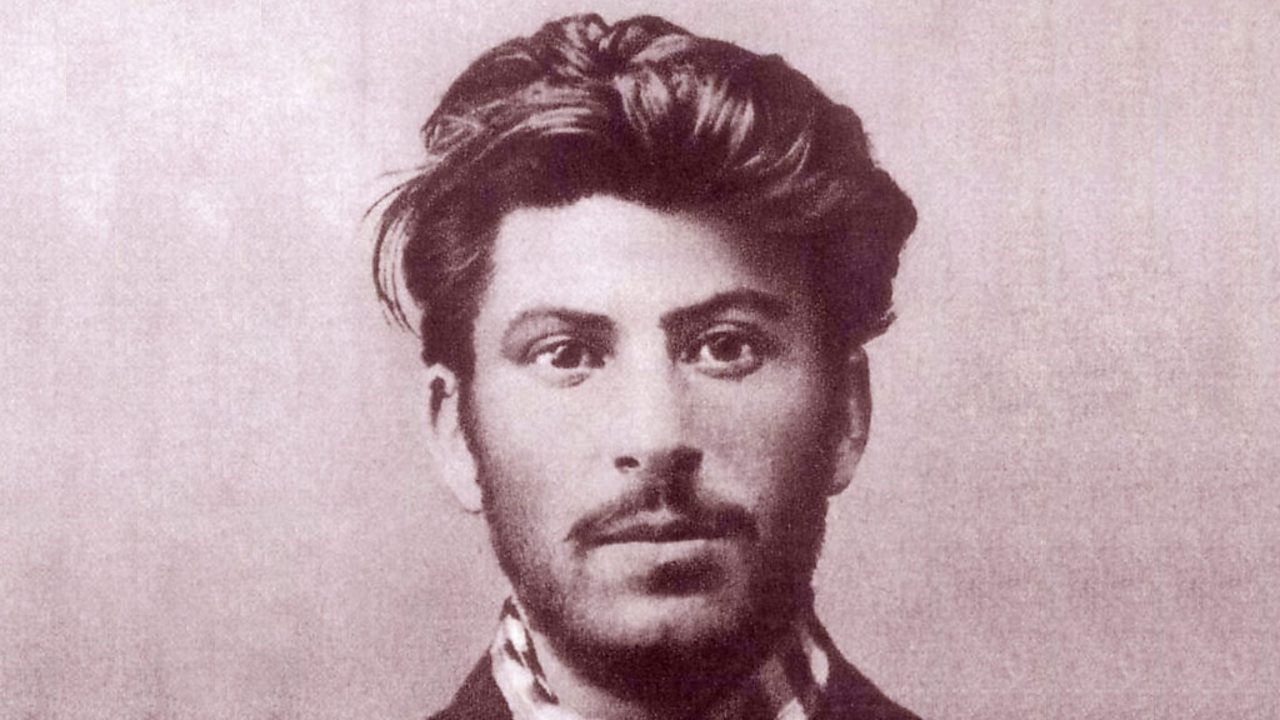
The purges were a campaign of political repression in the
Soviet Union from 1936-1938. The infamous NKVD Order No. 00447 was “wholly
destructive” because it targeted not just the intelligentsia and the kulaks in
what had previously been known as a ‘class war’ under Lenin but also
high-ranking members of the Politburo and leadership in the Red army.[1]
It was a purge of the entire society. According to Soviet archives from 1937
-1938, the NKVD detained 1,548,366 people and 681,692 of them were shot by
1938.[2]
It is unknown to what extent the purges were a ‘revolution from above’,
organised by Stalin for his own personal benefit because the purges were kept a
secret from the masses and Stalin was protected by his ‘cult of personality’.
He was seen as a father figure and in paintings he was often drawn with
children.[3]
Even in contemporary Russia there is still controversy over his involvement in
the purges and it was only until Khrushchev’s secret speech in 1956 that
exposed the full extent of his involvement that the purges became known
worldwide and the perception of Stalin began to change. The purges could also
have been a result from a ‘revolution from below’, triggered by the existing
social discontent in society, exacerbated by the years of violence and war
beforehand. Internal and external ‘enemies’ could be seen almost everywhere,
creating a mass ‘conspiracy’ theory that there were ‘counter revolutionaries’
within the party and other capitalist countries wanted to witness the failure
of the first communist state by sabotaging their infrastructure.[4]
As both J. Arch Getty and Roberta Manning noted: “although Stalin lit the match,
the cataclysm also required dry tinder and favourable winds” [5]
in order to become an operation of such mass scale.
The tradition of purges can be traced back to the Bolshevik
party’s revolutionary roots in the underground which had made them accustomed
to such violent methods, indicating that the purges were a result of social
preconditions of Stalinism.[6]
The Bolshevik revolution of 1917 had received little support from the
proletariat, turning it into a hypersensitive state that had little control over
such a vast nation apart from a small area in Moscow. As Montesquieu claims, the
Soviet Union was a ‘despot’ country because they needed to use violence in
order to survive and keep the people weak so that the government could remain
strong.[7]
The Bloody civil war (1917-1921) led to the emergence of the Red Terror against
the Whites, led by the Cheka which further centralised the government because
they purged those who were not loyal to the Bolshevik ideology and were using
their membership to gain social privileges.[8]
In this instance the difference was that Lenin did not execute those members
but merely exiled them from the party, indicating that the purges were a
culmination of Bolshevik violence. The tsarist state also practiced despotism
and Ivan the Terrible is the original inventor of the gulag. Nicholas II used
the Okhrana to spy on political figures and brutally repress the people in the
1905 Bloody Sunday. The purges were also thought to have been triggered by the
assassination of a leading Politburo member in 1934 called Sergey Kirov.[9]
Stalin refused to believe that it was an isolated act caused by domestic
reasons. The Soviet Union had a long history of terrorism and it was seen as
the beginning of the dissent within the party itself as old Bolshevik members,
Kamenev and Zinoviev were blamed for his murder in the Moscow trials of 1934.
Terror had become glorified as a means of protecting the revolution.
This revolutionary mindset of the Bolshevik party meant that
they attacked the revolutionaries before they themselves could be attacked. Potential
enemies against the state included Trotsky who was a member of the old
Bolshevik party and had posed one of the biggest threats to Stalin during the
leadership battle. Trotsky had been a popular figure since the successful
organisation of the Red Army during the Civil War but there had been a
fundamental clash of ideology between the two leaders and Stalin felt that the
purges were defending his political views. Trotsky supported the idea of a
permanent revolution whereby there could be a world-wide leadership of the
proletariat. Stalin supported socialism in one country whereby they would not
need help from other countries to industrialise because Russia was such a vast
nation. Extended criticism of the economic policy was published in Trotsky’s
journal Bulletin of the Opposition.
The troubling document contained a wealth of statistical material that had been
circulated among a relatively small number of leading economic officials. This
reinforced concerns that Trotskyists and other hidden enemies were among
leading officials.[10] The assassination of Trotsky in 1938 marked a
retraction of the violence of the purges because he no longer represented a
threat to the government. The state used the fear of being over thrown by the
masses as a justification for their purges against the masses, an idea that
even the Tsar’s used, suggesting that the purges were nothing new.
Stalin was not solely responsible for the purges, the NKVD and
their leaders Yagoda (active as head of the NKVD 1934-1938) and Yezhov
(1938-1940) were used as the main instruments of the purges.[11]
They were given political power, allowing them to use violence in order to
obtain confessions and gave them privileged status towards high ranking
officials or other ministries so that they could to ignore “proper channels”
when carrying out the purges.[12]
It was also often local agents such as regional officers at a lower level that
were responsible for determining those who were arrested during the purges. NKVD
officers were set quotas that they were obliged to fill or risk being denounced
themselves. As a result, there was no logic behind their arrests and towards
the end of the purge many ordinary peasants were arrested, often with little
evidence incriminating them and no trial. Stalin himself was not physically
present in the Kremlin during the period of the purges and he was often in his
own dacha, away from government. There
were also little personal records in the forms of diaries or letters to
demonstrate his views on the purge or the extent of his full involvement. His
own family was also affected by the purges. Both his brothers- in law Stanislav
Redens and Alexander Svandize were arrested and executed in 1941.[13]
Stalin had given the NKVD control over the purges and he was no longer
responsible for their outcomes.
The perceived threat of capitalist countries and ‘internal’
enemies created an atmosphere of fear, triggering the purges. The violent
atmosphere during the years of the Bolshevik party had heightened the
government’s sensitivity, especially communism was failing on the World stage.
The Weimer Republic had been replaced by the fascist dictator Hitler and there
was the fall of the Social Democratic government in Finland in 1930 due to a
fascist coup.[14] The
NKVD were responsible for the collection and processing of intelligence
information, yet there were flaws with these methods.[15]
There was a bias to present information that created a wide ranging ‘conspiracy
theory’ which would give the NKVD more power that had greatly diminished since the
end of collectivisation and dekulakisation. The borders of the Soviet Union had
been porous and susceptible to invasion: The Mongol invasion, Napoleon and the
Sino Japanese war of 1905. The Soviet Union was both economically and military
behind its western counterparts which made them vulnerable targets. Other
reports claimed that the British and the French were allying with the Polish
when in reality they were trying to stop the Germans from becoming too
powerful. There was also a fear that Japan was organising a ‘bloc’ with Poland
and Romania against the Soviet Union even though they were restrained by the
war in China.[16] The
NKVD enflamed these fears of attacks in an already paranoid nation, suggesting
that Stalin was not responsible for the purges but rather the revolutionary
nature of the government.
The purges were also instigated under a background of
growing labour unrest, indicating that social and economic themes were also
intertwined alongside the political motivations of the purges. Peasants
resented the high levels of grain procurement, especially during the early
famines years of the 1930’s and worked with local officers to save their grain
in order to survive. Stalin also had a negative relationship with many of his
senior commanders because most of his interaction with them since the beginning
of the 1930’s had been limited to threatening them with death of they failed to
reach production levels for the unrealistic targets set during the Five- year
Plan. [17]
The plan encouraged a system of blame within the industrial sphere because
nobody wanted to be held responsible for their failures even though there was a
lack of resources to be used in production. There was an emphasis on heavy
industry instead of light which meant that there was a shortage of consumer goods
which were often of poor quality because quantity was valued over quality and
lowered the standard of living for the masses. Every political despot would try
to shift the blame onto others, hence the need for ‘scape goats’ who were
targeted during the purges for attempting to sabotage the infrastructure of the
Soviet Union.[18] The
purges were used both to hide the mistakes of the government or to suppress the
discontent of the people before it posed a serious issue to their authority.
Despite these claims, there is little doubt that Stalin
himself was personally responsible for the purges. He had essentially created
his own dictatorship in a ‘socialist-democratic government’ giving him total
control. The ban of fractions (1921) under Lenin had created the perfect
environment for Stalin to rule uncontested. There were no right or left-wing
sections of the parties that opposed his views and he had exiled both Zamenev
and Kinoviev, his original competition during the leadership battle away from
the party. Some psychologists have considered Stalin’s personality type and diagnosed
him as irrationally paranoid and constantly afraid that others were plotting
against him.[19]In
his daughter, Svetlana’s diaries she describes a setting of him sitting in the
garden with a folder of names provided by the NKVD and ticking or crossing
those who would live or die[20]
because “the life of one man depended entirely on the word of my father”.[21]
Stalin signed 357 death lists in both 1937 and 1938 which authorized the
executions of 40,000 people, about 90% of these were confirmed to have been
shot.[22]
Stalin was the political leader that was
in charge of mass deportation of the minorities and in WWII he had 10,000 of
his own soldiers shot during the first four months of war.[23]
He was violent by nature yet he was never personally involved in these events,
but rather remained removed from these events and had others such as officers do
the deed for him. There was also the theory of a “permanent purge” which
continued after the official end of the purges in 1938 until his death in 1953.
The last purge was the Doctor’s plot of 1953 who were accused of attempting to
murder Stalin and other high-ranking officials under the orders of the American
government. It is significant that after his death they were absolved of all
guilt and set free, indicating that Stalin had been a main driving force behind
the purges.
It is undeniable that Stalin was responsible for the purges
of the 1930s as he represented an authoritative figure in the Soviet Union who
personally oversaw the executions and mass arrests of those in the purges. The
purges were motivated by his own personal desire for power which gave him the
ultimate pretext to remove his opposition from power without doing the deed
personally. Many of the first victims of the purges were Old Bolsheviks such as
Kamenev and Zinoviev who had presented the biggest threat to his position.
Stalin’s fear of an invasion from abroad was genuine, given his paranoid nature
and the underdevelopment nature of the Soviet Union which placed them as easy
targets for the capitalist countries of the British and the French. The NKVD
did twist the information that Stalin received, although he willingly did not
listen to the information provided to him that contradicted his views and had
given the leaders of the NKVD the power to arrest those that they deemed as
‘enemies of the state’ without going through the appropriate beauracratic
channels. However, the social discontent of the masses in the Soviet Union also
meant that it was imperative for the government as a whole to suppress the
people in order to maintain their power and defend the revolution but Stalin
was responsible for encouraging the purges on such a mass scale due to his own
paranoid fear and controlling characteristics.
Bibliography:
Books:
Conquest,
Robert, The Great Terror, Stalin’s purge
of the 1930s (London: Macmillan, 1968)
Figes, Orlando, The Whisperer: Private Life in Stalin’s
Russia (London: Allen Lane, 2007)
(eds)
Getty, J.A, and Manning, R.T, Stalinist
Terror: New Perspectives (Cambridge: Cambridge University Press, 1993)
Harris,
James The Great Fear: Stalin’s terror of
the 1930’s (Oxford: Oxford University press, 2016)
Khlevniuk
O. (2003) Party and NKVD: Power
Relationships in the Years of the Great Terror. In: McLoughlin B.,
McDermott K. (eds) Stalin’s Terror
(London: Palgrave Macmillan)
Orlov,
Alexander, The secret history of Stalin’s
crimes (London: Jarrolds, 1954)
Pipes,
Richard, Communism: A History (New
York: Random House, 2001)
Sullivan,
Rosemary, Stalin’s Daughter: The
Extraordinary and Tumultuous Life of Svetlana Alliluyeva (London:
HarperCollins, 2015)
Journals:
Barnett, Vincent,
“Stalinist Logic, Excess Morality and the Rational Fool: A Response to Davies,
Wheatcroft and Harrison”, Europe-Asia
Studies, Vol. 59, No. 3 (2007), pp. 521-527
Boesche, Roger “Fearing
Monarchs and Merchants: Montesquieu's Two Theories of Despotism.” The
Western Political Quarterly, vol. 43, no. 4, 1990, pp. 741–761
Ellman, Michael,
“Stalin and the Soviet Famine of 1932–33 Revisited” Europe-Asia Studies, Vol. 59, No. 4, (2007) pp. 663–693
Hachinski,
Vladimir, “Stalin’s last years: Delusions or dementia?” European Journal of Neurology, vol 6, No 2, (2007) from: https://doi.org/10.1111/j.1468-1331.1999.tb00004.x accessed: 15/03/2018
Online
works:
McDermott, Kevin, Stalinism ‘From Below’?: Social Preconditions of and Popular Responses
to the Great Terror, Totalitarian Movements and Political Religions (2007)
from: https://doi.org/10.1080/14690760701571239 accessed: 15/03/2018
[1]
James Harris, The Great Fear: Stalin’s terror
of the 1930’s (Oxford: Oxford University press, 2016), p. 2
[3]
Robert Conquest, The Great Terror,
Stalin’s purge of the 1930s (London: Macmillan, 1968) preface, p. X
[4]
Kevin
McDermott, Stalinism ‘From Below’?:
Social Preconditions of and Popular Responses to the Great Terror, Totalitarian
Movements and Political Religions (2007) p. 616 from: https://doi.org/10.1080/14690760701571239
accessed: 15/03/2018
[5]
(eds) J. A. Getty and R. T. Manning, Stalinist
Terror: New Perspectives (Cambridge: Cambridge University Press, 1993),
pp.15.
[6]
Conquest, The Great Terror, pp. 3
[7] Roger Boesche, “Fearing Monarchs and
Merchants: Montesquieu's Two Theories of Despotism.” The Western
Political Quarterly, vol. 43, no. 4, 1990, pp. 741–761 (pp.741)
[8]
Harris, The Great Fear, pp. 3
[9]
Orlando Figes, The Whisperer: Private
Life in Stalin’s Russia (London: Allen Lane, 2007) pp. 236
[10]
Harris, The Great Fear, pp. 110
[11]
Harris, The Great Fear, pp. 110
[13]
Rosemary Sullivan, Stalin’s
Daughter: The Extraordinary and Tumultuous Life of Svetlana Alliluyeva
(London: HarperCollins, 2015), preface, pp. III
[14]
Harris, the Great Fear, pp. 104
[15]
Harris, The Great Fear, pp. 32
[16]
Ibid, pp. 105
[17]
Vincent Barnett, “Stalinist Logic, Excess Morality and the Rational Fool: A
Response to Davies, Wheatcroft and Harrison”, Europe-Asia Studies, Vol. 59, No. 3 (2007), pp. 521-527 (pp. 523)
[18]
Alexander Orlov, The secret history of
Stalin’s crimes (London: Jarrolds, 1954), p. 294
[19]
Vladmir Hachinski, Stalin’s last years:
Delusions or dementia? European Journal of Neurology, vol 6, No 2, (2007)
pp. 130 from: https://doi.org/10.1111/j.1468-1331.1999.tb00004.x
accessed: 15/03/2018
[22] Michael Ellman, “Stalin and the Soviet Famine of 1932–33 Revisited” Europe-Asia Studies, Vol. 59, No. 4, (2007)
663–693 (pp. 676)
[23]
Ibid, pp. 676
Comments
Post a Comment